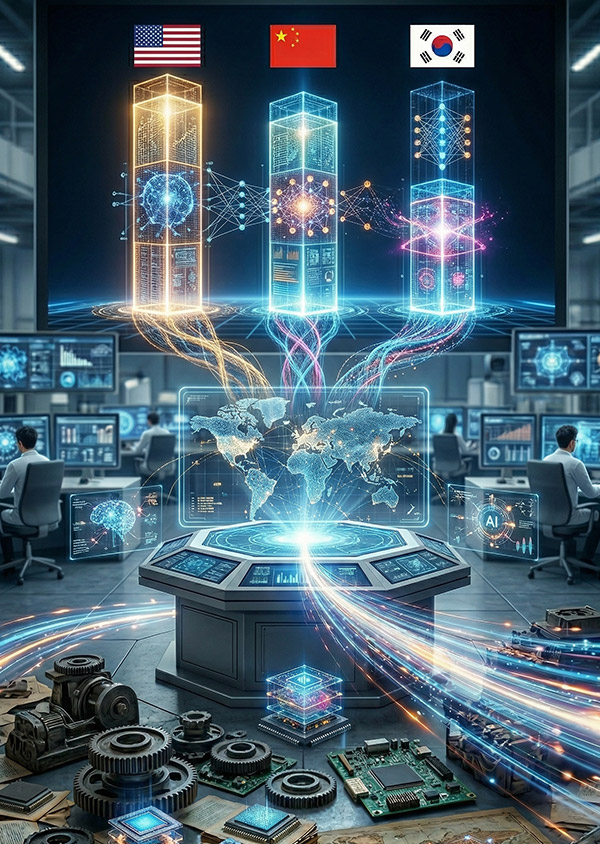
The AI Revolution as a Civilizational Turning Point
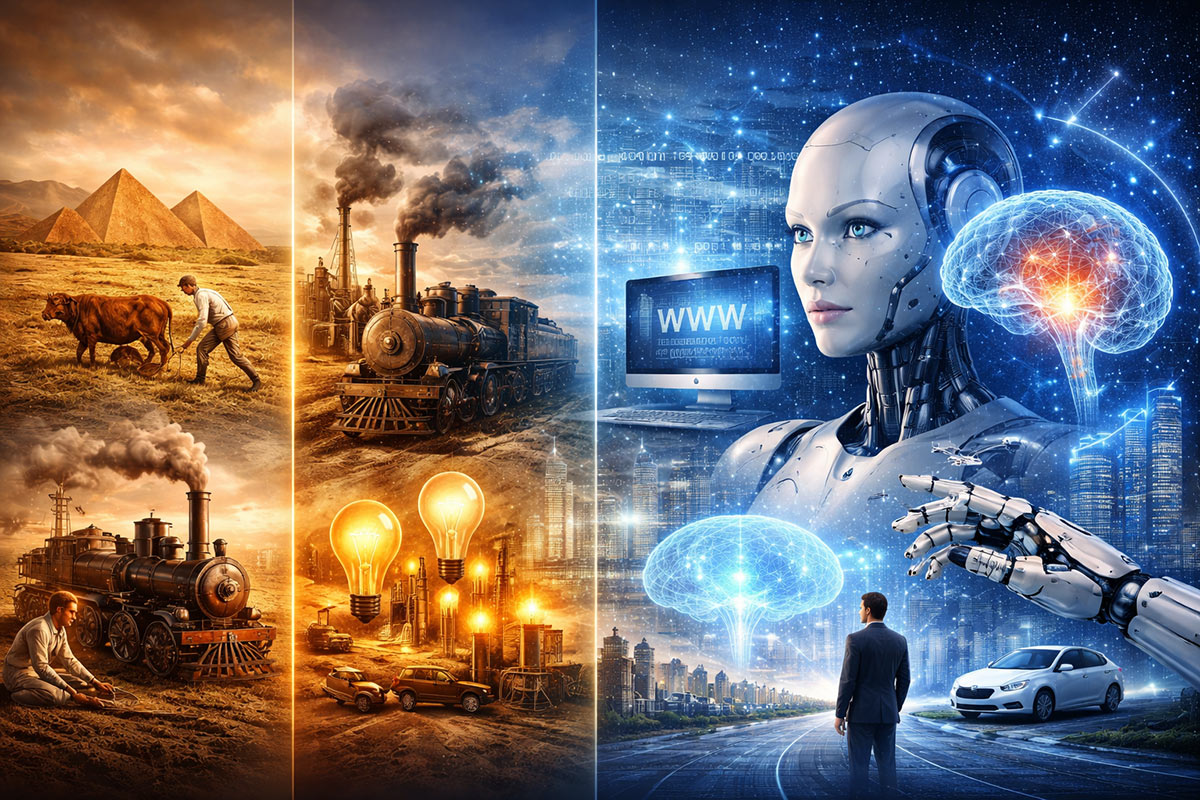
Human history has advanced through great revolutions. The agricultural revolution, which enabled settled life from hunting and gathering, laid the foundation for population growth and human development, while the Industrial Revolution of the eighteenth century dramatically increased productivity by replacing labor with steam engines and machinery. The invention and spread of electricity later triggered another revolution that shaped the twentieth century. Developments such as water and sewage systems, refrigerators, and advances in dentistry significantly improved human hygiene and life expectancy.
The information revolution (internet) that emerged in the early 1990s completely reshaped corporate rankings and social structures. However, the AI (artificial intelligence) revolution we now face is a civilizational event with an impact 100 times, 1,000 times, or even 10,000 times greater than that of the internet revolution. This transformation goes beyond technological advancement, reshaping the way humanity makes decisions, redefining labor, and reorganizing the status of nations.
The 2016 AlphaGo Shock: Catalyst for AI Investment and a Painful Missed Opportunity
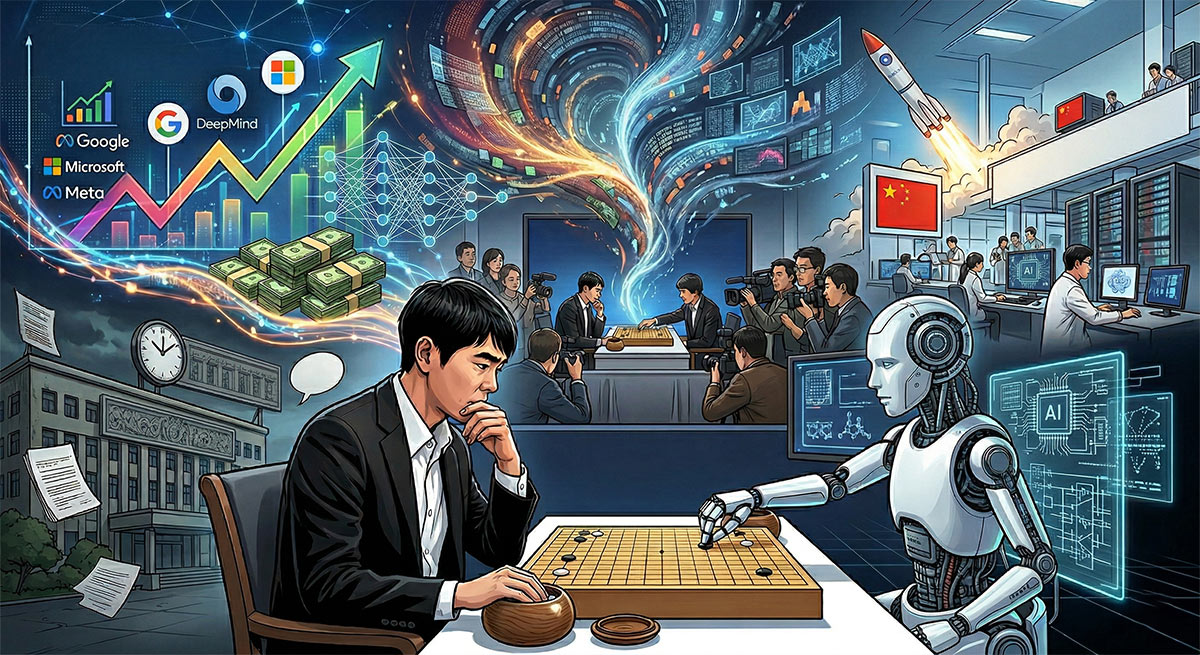
South Korea stood at the center of the historic moment that became the catalyst for the AI revolution. In March 2016, the five-game match between Google DeepMind’s AlphaGo and Lee Sedol, held at the Four Seasons Hotel in Seoul, captured global attention. As President of the Korea Baduk Association at the time, I witnessed this moment firsthand and experienced the power of AI.
Demis Hassabis, the head of DeepMind at the time, was a chess champion and prodigy who became fascinated with the complexity of the East Asian game of Go. He founded DeepMind and completed a Go-playing AI through learning. Lee Sedol achieved the only victory in human history against AI in Game 4, but AI advanced rapidly thereafter, and humanity has now reached a stage where humans can no longer defeat AI.
After this match, Google’s market capitalization increased by approximately USD 1 trillion (more than KRW 1,300 trillion). The Lee Sedol–AlphaGo match became the decisive turning point that convinced Silicon Valley’s big tech companies of AI’s potential and led them to pour massive investments into the field. However, despite promoting a “creative economy,” the Korean government at the time failed to seize this revolutionary event as a national strategic opportunity. China, by contrast, designated AI as a national priority after this event and began catching up at a formidable pace.
The U.S.–China AI Power Competition: A Country of Engineers vs. A Country of Lawyers
The structure of the AI competition is now consolidating into a two-power system centered on the United States and China. Dan Wang, in his book Breakneck, compares the United States as a “Country of Lawyers” and China as a “Country of Engineers.”
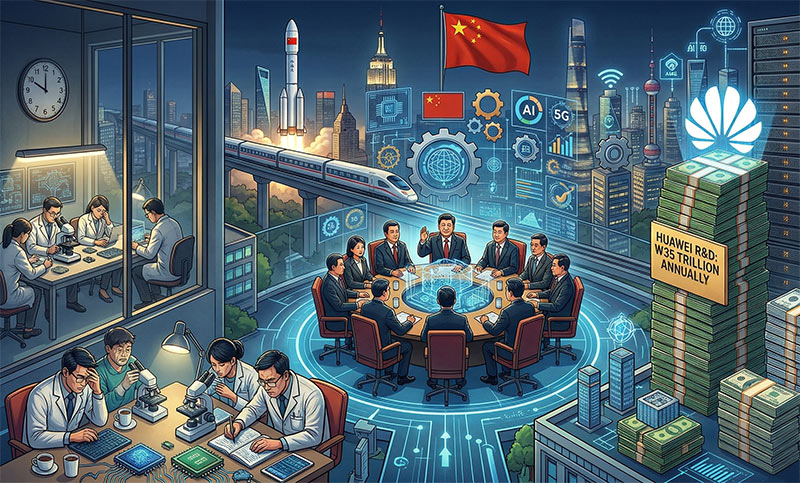
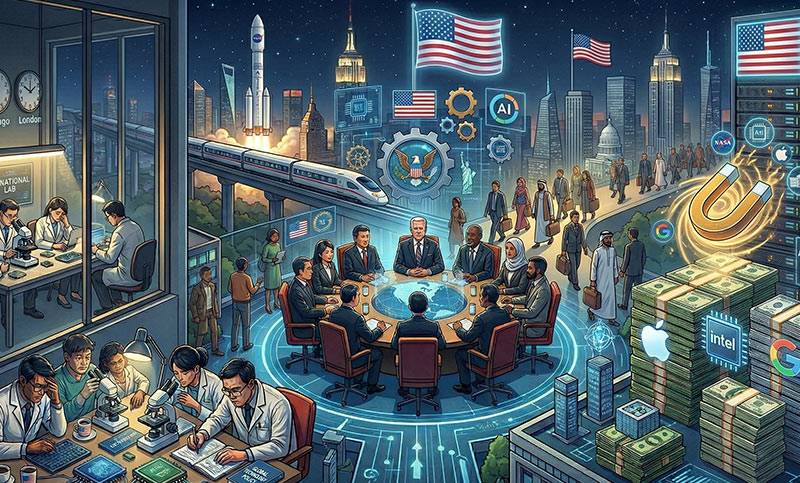
In China, a significant portion of political leadership (previously 70–80 percent, now about 50 percent) comes from engineering backgrounds, resulting in a very high level of technological understanding. With strong state-led support, China operates immersive research environments often described as “996” (9 a.m. to 9 p.m., six days a week) or even “007” (midnight to midnight, seven days a week). Companies such as Huawei invest approximately KRW 35 trillion annually in R&D, comparable to South Korea’s total national R&D budget.
The United States, rather than cultivating engineers alone domestically, possesses an “attractiveness” that draws the world’s top talent. Many of Silicon Valley’s core engineers are talent from India, China, and other countries. By opening immigration pathways and absorbing global talent, the United States has maintained its industrial competitiveness.
China’s leadership is concerned that AI could threaten the Communist Party’s centralized control system. At the same time, they are devoted to mastering technology to maximize national competitiveness, with Politburo members regularly engaging in collective learning sessions focused on AI and emerging technologies.
The “Future” Witnessed by Thomas Friedman'
In late June 2025, I organized “Peace Odyssey 2025” and travelled to China’s AI field sites. The decisive catalyst was a column by New York Times columnist Thomas Friedman. After visiting Huawei’s R&D center, Friedman described China’s technological revolution with the striking phrase:
“I Just Saw the Future. It Was Not in America.”
In addition, the emergence of China’s generative AI “DeepSeek” shock provided a tangible sense of the growth of China’s advanced AI industry. While South Korea remained bound by political conflict and regulation, complacent with past success, a sense of crisis emerged that China was already approaching the peak of technological dominance. This urgency formed the core purpose of the visit.

Field Visit Schedule and Key Institutions in China’s AI Revolution (29 June – 2 July 2025)
The delegation consisted of approximately forty opinion leaders, including former foreign ministers, presidents of major universities, members of parliament, and leading AI experts. Over three nights and four days, the group visited major hubs in Shanghai and Hangzhou.
On the first day,we visited the Shanghai Urban Planning Exhibition Center, which demonstrated AI- and data-based urban management, and iFLYTEK, a leader in AI speech recognition.
On the second day,we visited SenseTime and Mosu Space, which are expanding computer vision and AI platforms into robotics, as well as Huawei’s Lianqiu Lake R&D Center, which has built a massive research ecosystem.
On the third and fourth days,we visited Zhejiang University, which ranks among the top in global scientific research, as well as BrainCo, a brain–computer interface company, and DeepRobotics, which develops quadruped and humanoid robots, confirming the realities of technological commercialization.
Five Keywords of China’s AI Competitiveness Observed on Site
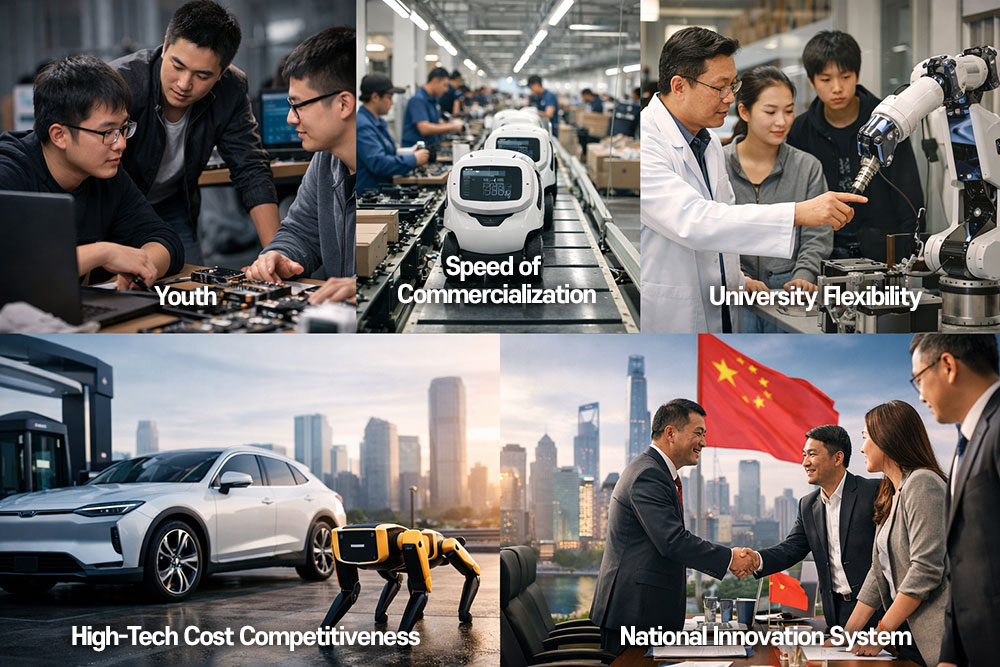
The delegation summarized the competitiveness of Chinese high-tech firms observed on site into five key characteristics.
01
Youth
Companies founded within the last decade dominate, led by CEOs in their 30s and 40s and young engineers in their late 20s.
02
Speed of Commercialization
Not only are technologies developed, but the speed at which they generate revenue is striking.
03
University Flexibility
Leading universities such as Zhejiang University serve as talent infrastructure linking experimentation and commercialization at high speed.
04
High-Tech Cost Competitiveness
Costs of EVs, robots, and AI services are rapidly decreasing, strengthening global market dominance.
05
National Innovation System
The government functions as an entrepreneurial state, connecting ecosystems and creating markets through procurement rather than acting only as a regulator.
South Korea’s Reality and Risk Factors
South Korea is currently assessed as a “distant third” in AI competitiveness behind the United States and China. However, maintaining even this position requires overcoming several structural limitations.
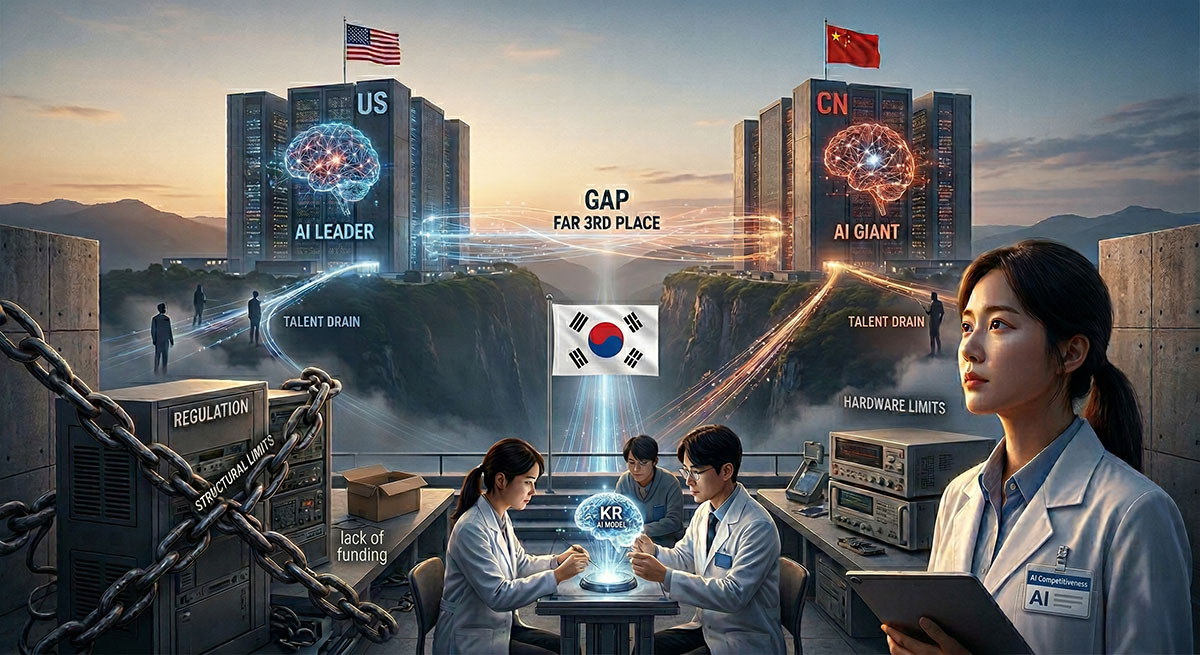
First, talent allocation is distorted. In the past, South Korea’s development was driven by top engineering talent.
Today, the best students concentrate in medical schools and law schools. In a social structure where engineers are undervalued while doctors and lawyers are admired, sustaining AI competitiveness is difficult.
Second, rigid labor structures and regulations are problematic.
While Chinese researchers immerse themselves day and night, South Korea remains constrained by regulations such as the 52-hour workweek and a strong work-life balance culture. Institutional flexibility is needed to enable collective immersion in R&D.
Third, political indifference and conflict hinder progress.
Technology advances at the speed of light, yet politics remains trapped in past logic. Strategic investment and social consensus are urgently needed to respond to the civilizational changes brought by AI.
Recommendations for the Future: Korea’s Survival Strategy
Domestic talent cultivation alone has limits. Like the United States, Korea should boldly open immigration pathways so that talent from Russia, India, Vietnam, and across the world can come to Korea. The education system must also be reformed so that AI-native generations can grow in AI-friendly environments. Established leaders must also develop AI-friendly capabilities.
If it is difficult to surpass the United States and China in software, Korea should focus on Physical AI by leveraging its strengths as a manufacturing powerhouse. By combining semiconductor chip technologies from Samsung and SK Hynix with traditional manufacturing industries, Korea can position itself as a strategic hub that the United States cannot ignore.
Regulations should be relaxed so researchers willing to work intensively can immerse themselves, and institutional flexibility should recognize the unique nature of R&D. As AI replaces labor and creates employment instability, serious deliberation on universal basic income and rational distribution systems should begin.
Where past diplomacy centered on military and economic power, future diplomacy will become “AI diplomacy.” Political leaders must internalize AI knowledge to position the nation in international dynamics. At the same time, attention must be paid to safeguarding democracy so AI does not become a tool of authoritarian rule.
Missing the AI Revolution Means the Opportunity Will Never Return
In the past, South Korea was a benchmark for China, but now we have entered an era where we must follow China. China’s speed, scale, and the ambition of its talent exceed imagination.
We must not become complacent with past success and must renew our mindset. The AI revolution is irreversible, and if we fall behind, the opportunity will not come again. Government, industry, universities, and labor must unite, and leaders who understand technology must step forward. Rather than settling for third place, now is the time for determined effort to narrow the gap with the top two.
Korea’s national character is flexible and quick to adapt. By maximizing these strengths, the AI transformation should be turned into an opportunity for a new leap forward rather than a crisis.