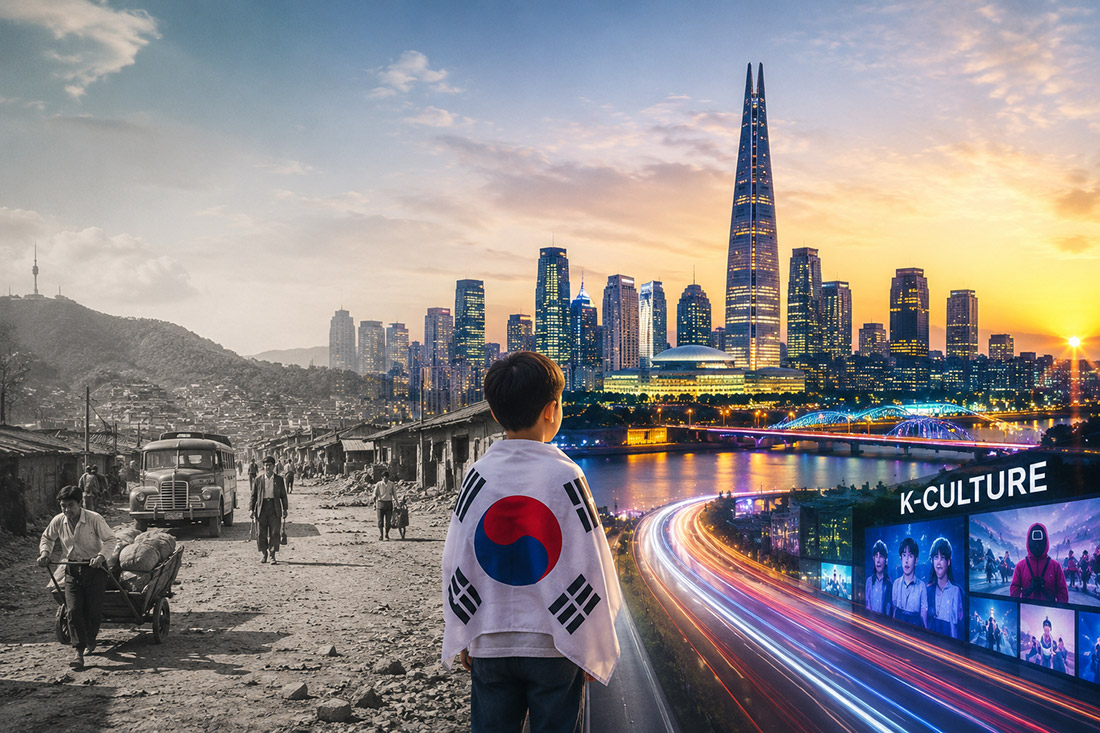
How was it that the people of a nation which had spent five hundred years of the Joseon Dynasty in stagnation before falling into colonial rule were able, over the past seventy to eighty years, to accomplish achievements that seem almost miraculous? This is a question that people around the world continue to ask, and one that must be documented and explained for the historical record. Numerous attempts have been made, both in Korea and abroad, to answer this question, and my recent book, The Political Economy of Korea's Economic Growth: Reflections and Lessons (2026), is one such effort. In this essay, however, I wish to discuss Korea's present and future rather than its past.
Stagnant Economy and Divided Society
Today, the Korean economy has once again fallen into stagnation, while its politics and society are deeply divided. Over the past decade or so, Korea's economic growth has remained well below the global average. More recently, an unexpected economic boom has emerged as soaring demand and prices for semiconductors—driven by the global AI investment boom—have caused the profits of Samsung Electronics and SK Hynix to surge dramatically. Yet it remains uncertain how long this momentum will last. It is unlikely that the United States, China, and Japan will allow Korean semiconductor firms to enjoy such dominance indefinitely. That is simply the nature of markets and the course of history.
Intensifying U.S.–China rivalry, U.S. technology and trade restrictions on China, and the restructuring of the international order have together brought prosperity to a number of Korean industries, including defense, shipbuilding, and semiconductors. This has provided much-needed breathing space for the stagnant Korean economy, like welcome rain after a long drought. At the same time, however, these very changes in the external environment will impose substantial costs on the nation as a whole. In any event, Korea continues to face rapid population aging, persistently low birth rates, declining working hours and productivity, and—apart from a few sectors such as semiconductors—structural stagnation across nearly all industries as they have long been confronted by the rapid rise of Chinese competitors.
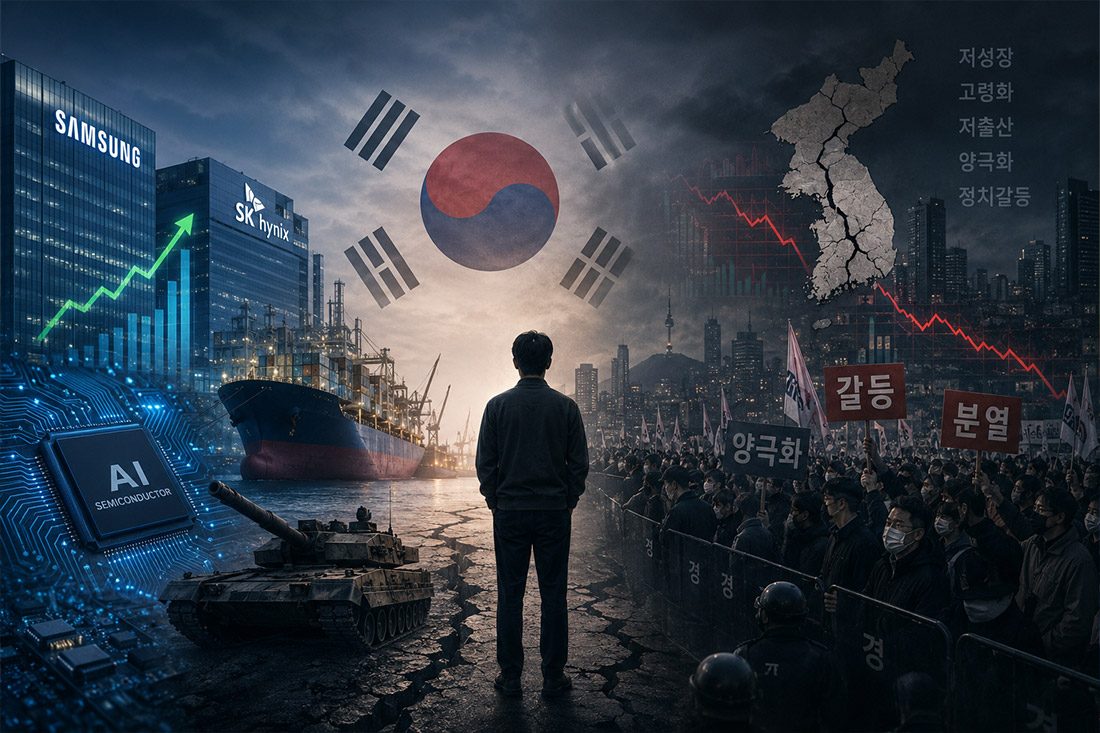
Alongside this economic stagnation, Korea is suffering from a worsening dual economic structure, increasing polarization, political regression, deepening social conflict and division, and a profound deficit of social trust. Starting from the late Joseon period, and through the Japanese colonial era, the post-liberation land reforms, and the Korean War, the traditional class hierarchy was completely dismantled. By the mid-1950s, nearly all Koreans found themselves standing at roughly the same starting line, unleashing a dynamism that erupted like lava.
Regrettably, however, this extraordinary momentum lasted for only about one generation. As vested interests emerged and became entrenched beginning in the 1980s, opportunities for upward mobility narrowed, income inequality and the economy's dual structure intensified, and the concentration of economic power constrained the vitality of the broader industrial ecosystem. Over the past several decades, Korea's political system and institutions of governance have failed to demonstrate the capacity to resolve these problems.
Structural reforms have accumulated in backlog, resource allocation has become increasingly distorted, and the country has become dependent on crises—relying on external pressure to carry out even minimal restructuring only when a crisis arrives. Among today's younger generation, frustration has become more pervasive than hope. The structures of politics, public administration, industry, labor unions, and civil society have become increasingly rigid, making innovation and restructuring ever more difficult. Democratization itself has become ideologized as procedural and formal democracy, and we must ask whether we have fallen into the trap of what Francis Fukuyama (2012) described as vetocracy.
"We stand at a critical juncture. Successfully conquering this challenge will allow us to leap to the very center of the global community."
Crises and Challenges: Opportunities for a New Leap
Over the past seventy years, Korea has achieved extraordinary economic, political, and cultural accomplishments, yet the level of happiness among its citizens remains low. According to the World Happiness Report, which compares national levels of happiness with support from the United Nations Sustainable Development Solutions Network (UN SDSN), South Korea ranked 67th out of 144 countries in 2026. Despite having one of the world's highest life expectancies, a per capita GDP that ranks among the highest globally, and top-tier public safety and access to healthcare, the country's level of happiness remains comparatively low. The report attributes this to Korea's low level of social trust, weak sense of community solidarity, limited tolerance toward others, corruption, intense competition, and high levels of stress.
Many people are asking: Has the story of South Korea's success come to an end? At the heart of the challenges facing the Republic of Korea today are the structural stagnation of its economy and deepening polarization, the regressive transformation of its politics and the intensification of division and conflict, and the fragility of social trust. More importantly, it is difficult to discern a national vision or the capacity to address these problems. Since democratization, successive governments have focused on short-term economic stimulus and winning the next election, losing sight of the long-term perspective while neglecting the worsening of structural problems.
Even when attempts at reform were made, they were often swept away by political conflict. As the restructuring of the international order and the civilizational transformation brought about by the AI revolution unfold before our eyes, Korea is losing its ability to formulate and implement long-term strategies for the future. On the other hand, however, the Republic of Korea has faced countless challenges ever since its founding, and most of the problems confronting Korea today are by no means unique to Korea. Indeed, they are challenges shared by nearly all advanced economies in the age of globalization.
If Korea successfully overcomes these challenges, it may well rise to an even higher level in the process and emerge as one of the world's leading nations. According to Arnold Toynbee and other historians who have studied the rise and fall of nations, the future of a country and its community is determined by how it responds when confronted with challenges. I believe that this is precisely the point at which the Republic of Korea now stands.

Hope Found in People: The Global Younger Generation
I continue to have hope for Korea's future. The reason is its people. Korea possesses little other than its people, and it is because of its people that the nation has risen to where it is today. Koreans today are also vastly different from Koreans seventy years ago. It is said that immediately after liberation, the illiteracy rate in Korea approached 80 percent. Following the establishment of the Republic of Korea, the educational attainment of Koreans increased just as rapidly as the country's economic growth.
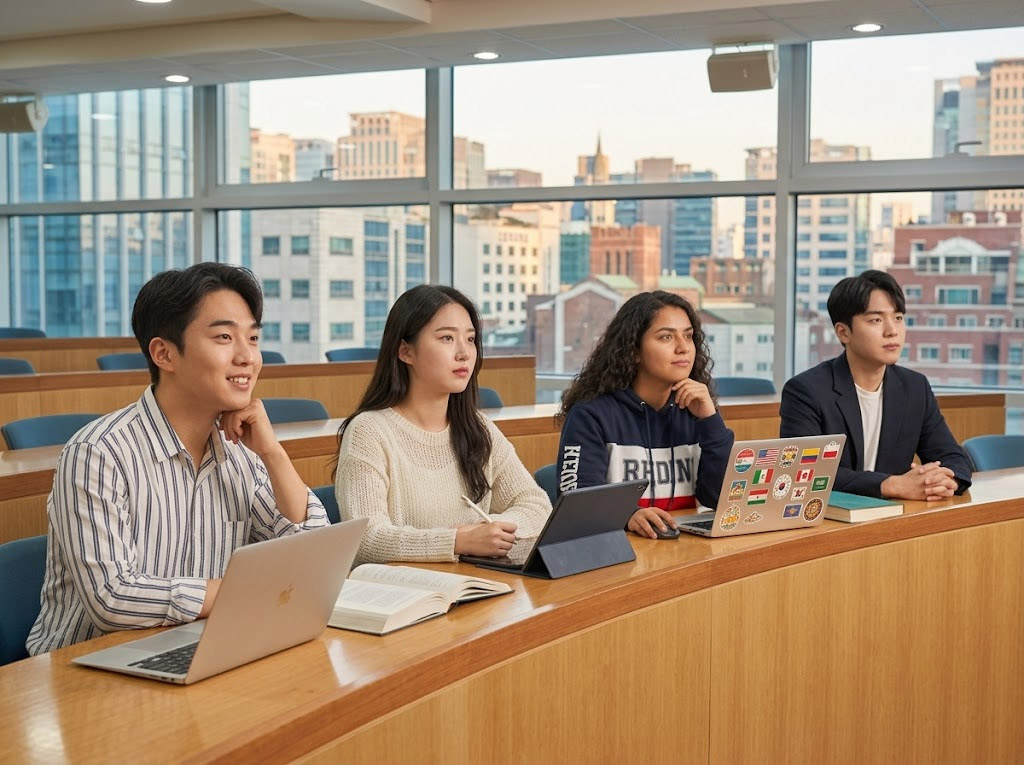
Beginning with rising enrollment rates in primary and secondary education in the 1950s, Korea surpassed both Japan and the United States in university enrollment by the 2000s, ranking first in the world. If one were to include the world's longest hours of private supplementary education, Koreans now in their forties and younger are, regardless of the quality of that education, among the most extensively educated young people in the world in terms of time spent learning.
Their educational attainment, ability to acquire information, global perspective, international outlook, and foreign language skills are second to none among the youth of advanced countries. If my generation brought Korea from one of the world's poorest nations to the threshold of advanced-country status through imitation and catch-up, then the generations now leading Korea—those in their forties and fifties and younger—possess more than enough ability and talent, armed with knowledge, information, a global outlook, and self-confidence, to firmly establish Korea as an advanced nation and elevate it into the center of the world.
Governance Innovation and the Future of Convergence
Yet this will by no means happen automatically. The excellence of individuals does not necessarily guarantee the flourishing of a community. Individual capabilities must be brought together as a collective strength. A community culture founded upon tolerance and inclusiveness, solidarity and cooperation must take root. Alongside this, sound national institutions must also be established. This is precisely what the Korean people—and Korea's political leaders—must now accomplish. In today's world, where information, capital, goods, and knowledge markets have become integrated, a nation's international competitiveness ultimately derives from the competitiveness of its governance.
At present, Korea's system of governance and its broader system of incentives and rewards suffer from significant limitations. Reform has stagnated, while the flow of talent and resources has become distorted. Politics, public administration, and society as a whole have become excessively short-term in their outlook. This must change. Reform and innovation go far beyond the issue of constitutional revision alone. They involve redefining the values and order of the community, as well as the way the nation is governed.
Regrettably, when we established our democratic republic after liberation, we did not devote sufficient discussion and deliberation to these questions. Our first Constitution was hastily drafted by borrowing from Western constitutional models and frameworks of governance, including the Constitution of Germany's Weimar Republic. As a result, the system of national governance was significantly disconnected from the customs, culture, consciousness, patterns of thought, and modes of behavior that Koreans had developed over five thousand years of history. Korea's success over the past seventy years was made possible not so much by faithfully following this legal framework as by operating around it through expedient and extralegal means. This, however, is by no means desirable. The time has come to establish a new system of governance under which the nation can prosper while fully adhering to the rule of law.
The alternation of political power every five years has undermined policy continuity and consistency, while also leading to frequent turnover among senior government officials and heads of major public institutions, further reinforcing a short-term outlook throughout society. A comprehensive review and restructuring are needed with respect to the presidential term, the party system, the electoral system, the organization of the executive branch and the bureaucratic system, as well as the relationship between the executive and the National Assembly. Legal amendments are necessary, but they alone will not suffice. It is impossible to regulate every aspect of national and social governance through statutory provisions alone.
The spirit, character, common sense, and culture of the community are equally important. Innovation in the "software" of governance—including personnel practices, inter-party competition, and systems of incentives and rewards—and the resulting renewal of the way the country is governed are essential. It is also important to strengthen the virtue and sense of mission among the nation's political, economic, and intellectual elites. This is an extraordinarily difficult undertaking, and such change can occur only through consistent efforts sustained over a long period of time. Nevertheless, if the Republic of Korea is to overcome its current stagnation, harness the full potential of its people, and restore a sense of hope, this is a task that must begin now.
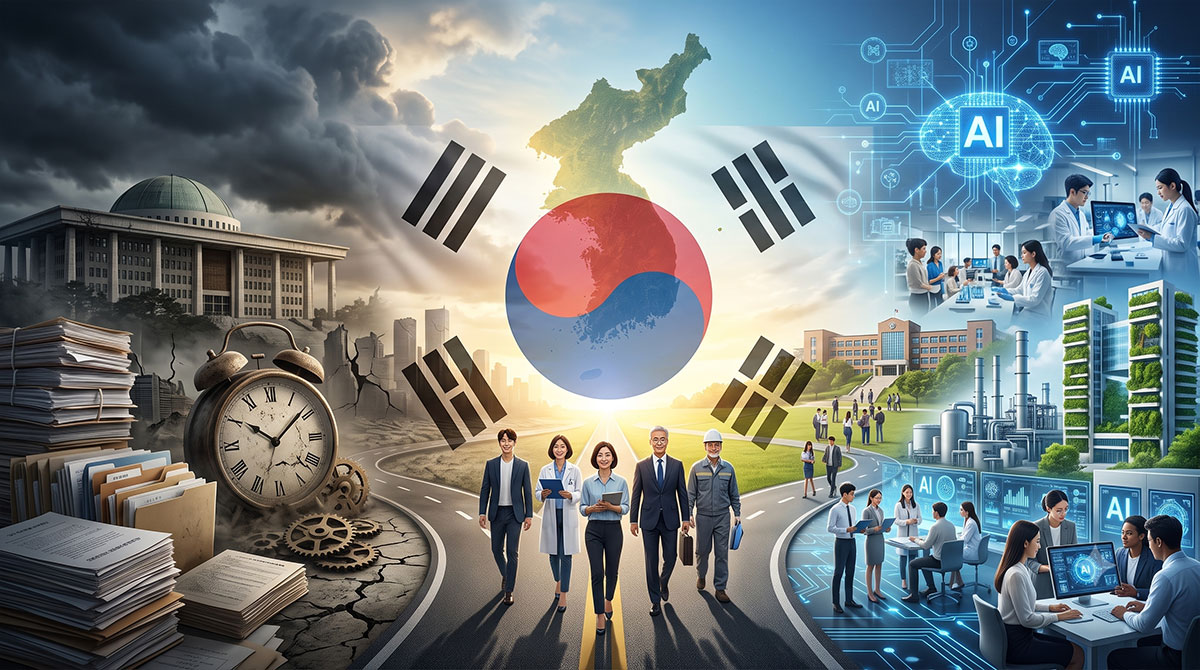
I hope that concrete discussions on these issues will now take place actively within Korea's intellectual community. At present, most of Korea's leading think tanks are government-funded institutions. There are not many think tanks that can sustain these discussions from an independent and long-term perspective. I hope that the Institute for Future Strategy at Seoul National University will play a significant role in this regard. We are now entering an era in which the centuries-long dominance of the West over the East, which characterized the past four to five centuries, is giving way to a rebalancing of power between East and West. This transformation is not limited merely to technology, economic strength, or military power. It also extends to knowledge and culture.
Ultimately, the world will need to build a civilization and institutions that integrate the strengths of both East and West. National institutions and culture must likewise achieve such an East–West synthesis if the future world is to be governed peacefully. In the late nineteenth century, as East Asia encountered Western civilization, China developed the idea of Chinese Learning as the Essence, Western Learning for Practical Use (中體西用), Joseon Korea advanced the concept of Eastern Principles, Western Technology (東道西器), and Japan embraced Japanese Spirit, Western Techniques (和魂洋才). Yet, under the overwhelming force of Western dominance at the time, each country realized these ideals to a different extent.
I have high expectations that Korea's younger generation will now take up this task. Looking around the world, it is difficult to find another country whose young people are as well positioned and as well prepared as Korea's to accomplish it. I hope that this will become both the hope and the mission of our younger generation, and that it will shape the future of both Korea and the world that they will create.