Is Korean Democracy on the Road to Revival?

Ho-Keun Song

The Political Class Offered No Atonement

Hostile Politics Persist
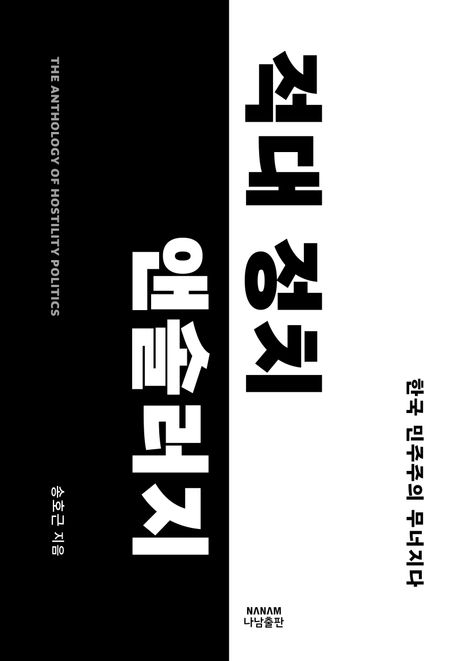
Responsibility for democracy’s collapse rests with the political class as a whole. Once the coup attempt failed, the opposition loudly declared a mission to “eradicate insurrection,” presenting itself as the agent capable of restoring democracy. Yet the legitimacy of such a claim remains questionable. Although the opposition succeeded in shifting responsibility and ultimately secured power, democratic revitalization has not followed. The earlier declaration of democracy’s “death” remains relevant. Even six months into the current administration, democratic recovery has not materialized. Rather than dismantling the hostile style of politics that has metastasized since the Roh Moo-hyun era, prevailing political actors continue to coat animosity and antagonism in the rhetoric of “justice.” The persistent dysfunctions of Korean politics—non-communication, enmity, ideological absolutism, distortion of public discourse, and the minimization of policy side effects—remain unresolved. Democracy requires the representation of public will, not the unilateral imposition of collective partisan intent. Among these maladies, the practice of “politics of cleansing” is particularly damaging: the systematic erasure of preceding administrations and the political exile of their figures. The first six months of the current administration offer little indication of departure from this pattern, suggesting that hostile politics is becoming entrenched as a chronic feature of political life.
The Politics of Purging Individuals
Former presidents Kim Young-sam and Kim Dae-jung were statesmen of considerable stature. They did not engage in politics driven by personal resentment. President Kim Dae-jung, who suffered more political persecution than anyone, abandoned retaliatory politics altogether. Although the approach may have been influenced in part by the imminent financial crisis, his administration concentrated on laying the ethical foundations of democracy. However, the administrations that emerged in the 2000s did not inherit the virtues of their predecessors. Under the slogan of “cleansing the four evil laws,” countless individuals were placed on lists of pro-Japanese collaborators, and many were burdened with accusations of corruption in private-school foundations. Subsequent administrations repeated undemocratic practices such as purges of individuals, ideological cleansing, and shifting responsibility for policy failures. This marked the beginning of an era of presidential suffering. The leading agents of so-called “eradicating deep-rooted evils” became the victims of hostile politics. Three conservative presidents all went to prison. President Yoon Suk Yeol shuttles to court with an exhausted expression. Progressive administrations have not been immune. Former president Roh Moo-hyun, ensnared in the conservative camp’s politics of retaliation, ended his own life. Former president Moon Jae-in continues to speak energetically while acknowledging none of the errors or missteps of his administration, seemingly forgetting his promises to open a “Gwanghwamun era” or to enjoy an occasional soju on his way home from work as an ordinary citizen. President Lee Jae-myung, perhaps conscious of the harms caused by unruly progressive politics, has largely refrained from public statements over the past six months. All five presidents pledged politics of tolerance, reconciliation, consultation, and compromise, yet they have struggled within the mire of hostile politics. Under such conditions, the guarded tone of President Lee Jae-myung raises anxiety over what hidden designs may lie beneath it.
Democracy operates through institutions and ethics. Even institutional reforms are of no value if their underlying intention is the elimination of individuals; under such circumstances, Korean democracy has no prospect of survival. The Lee administration is no exception. The abolition of the Prosecutors’ Office and the dissolution of the Korea Communications Commission are actions that are exceedingly rough, aimed ultimately at purging people. The initiative to abolish the Prosecutors’ Office has been the administration’s most intensive project during its first six months, followed by the Yellow Envelope Act, the strengthened Commercial Act, and the Disaster Safety Management Act—each pushed forward without regard for Korea’s economic structure or its historical development. The prosecution, past and present, has never escaped the stigma of being “political prosecutors.” Yet dividing the Prosecutors’ Office and reorganizing it under the Ministry of the Interior would only expand the discretionary power of political actors. Economic bills whose political purpose is clearly tied to rewarding the Korean Confederation of Trade Unions raise the question of whether they can revitalize the livelihoods of ordinary citizens. Had these measures been enacted through negotiations with the opposition, they could have been evaluated as reviving democracy; instead, they were unilateral actions driven by the power of the majority party.
When three special investigations failed to produce satisfactory outcomes, the current administration extended the duration of the special prosecutor. The scope of those implicated in the coup attempt was broadened, placing numerous generals and field-grade officers on lists for replacement, and expanding investigative authority to high-ranking public officials. Reports that President Lee Jae-myung stated during a Cabinet meeting, “Choose carefully,” caused deep despair. Purging individuals is a popular feature of hostile politics, and this trend provides a clear signal that the administration is following the errors and failures of every government since the 2000s.The end remains distant. When a new administration takes office, another wave of political bloodshed will follow, and many will again be headed toward prison—once more in the name of justice.
Indicators of Guardrail Breakdown
Democracy relies on guardrails. When a political system operates beyond those guardrails, authoritarianism awaits. Economist Daron Acemoglu conceptualizes this zone of safety as a “narrow corridor,” where the state and society maintain a delicate equilibrium through mutual constraint. Sustaining this balance requires ethical self-restraint among political actors and vigilant oversight by citizens—conditions that are inherently difficult to maintain. Korea’s political system has repeatedly tilted toward state-centered dominance, only to be corrected by electoral intervention, generating a recurring pattern of instability. Warning signals often go unnoticed. When political actors conclude that internal conflict cannot be resolved through institutional capacity, the temptation toward authoritarian consolidation emerges. Examples throughout Latin America, Southeast Asia, and Europe illustrate how leaders—and regimes—seize media, suppress competitors, politicize the judiciary, and deploy military and police forces to stifle dissent, often under the legal veneer of formal authority.
The Yoon Suk Yeol administration displayed several of these characteristics. However, the administration that entered office pledging to “eradicate insurrection” and “restore democracy” has also not escaped similar tendencies. Indicators of guardrail breakdown are evident: labeling the opposition as an “insurrectionary party” and exploring its potential dissolution; attempts to place pro-government figures in media leadership; removal of the Chief Justice followed by efforts to expand the number of Supreme Court justices and position loyalists; and broad expansion of special-prosecutor investigations to include extensive segments of the military and civil service. These developments mirror the four warning signs of democratic erosion identified by scholars Steven Levitsky and Daniel Ziblatt.
It is not coincidental that such issues dominated the 2025 regular National Assembly session. With committee control concentrated entirely in the ruling party, structural foundations for unilateral governance were systematically laid. The budget bill, passed solely by the ruling party, reinstated items previously eliminated under the Yoon administration, producing scenes approaching political irony. The slogan “eradicate insurrection” has evolved into a partisan weapon grounded in the belief that one’s own political camp represents democracy while the opposing camp embodies dictatorship. The true goal of “eradicate insurrection,” however, should be institutional redesign and transformation of the political norms that enabled the coup. Yet current political dynamics—including physical altercations among legislators—differ little from the pre-coup environment.

Anonymous Governance Errors
President Lee Jae-myung speaks relatively little. He remains quiet. This is because the ruling party’s leader, Jeong Cheong-rae, has stepped forward as a political kagemusha (stand-in). With the ruling party leader acting as a proxy—rough, loud, and pouring out harsh remarks—there is no need for the president to intervene. If there is any mismatch with presidential intentions, a subtle signal suffices. The unity between party and government has rarely operated with such discipline. As this continues, the stature of the opposition shrinks. There is no presence. Even the administration’s misjudgments are obscured by the ruling party’s monopolistic assertiveness. It took several months for the Lee administration to complete the formation of the cabinet. The abrupt transfer of power may explain the delay, but several baffling scenes unfolded. The Minister of Employment and Labor learned of the appointment while operating a train bound for Busan. As a former member of the Korean Confederation of Trade Unions, expertise in labor issues may exist, but it remains unclear whether there is knowledge of employment—particularly the structure and dynamics of the national labor market (though whether ministerial positions necessarily require specialized expertise is itself a topic of debate). A former superintendent of Sejong City was appointed Minister of Education. How much is known about university education? What of bold policies needed to cultivate higher education and youth talent in the AI era? These matters raise concern. The nominee for Minister of Gender and Family, Representative Kang Sunwoo, ultimately withdrew over allegations of workplace bullying.
Even the economic team, which has been credited with holding up reasonably well against U.S. President Trump’s tariff offensives, appears fraught with uncertainty. Deputy Prime Minister Koo Yoon-cheol from the Ministry of Economy and Finance, Minister Kim Jung-gwan from an industry background, AI Future Planning Chief Ha Jung-woo, and Economic Secretary Ha Joon-kyung from academia—can this level of experience and teamwork withstand the coming turbulence? The economic teams of the Kim Young-sam and Kim Dae-jung administrations were rich in expertise and seasoned in leadership. Under Chun Doo-hwan, an exceptionally capable economic team temporarily obscured the regime’s reputation for coercive repression. By comparison, the economic team and major ministers of the current administration appear anonymous and lacking in professional depth. “Pragmatic government”? The sudden unveiling of the “September 7 Housing Policy” reflects otherwise. Detached from the markedly transformed internal structure of the housing market, the policy resembled the failed housing agenda of the Moon Jae-in administration. Aside from expanding regulated zones in parts of Gyeonggi Province, little had changed.
How does this differ from the Moon administration, which revised housing policy 23 times yet failed to contain soaring housing prices? Does the administration intend to repeat the fatal mistake of spending 54 trillion won on minimum-wage hikes while failing to prevent employment decline? Politics without accountability is not democracy. To fulfill the dual requirements of democracy—representation and responsibility—state policy must undergo deliberation and verification. Who is crafting these policies? It remains unknown. If anonymous, non-expert actors are responsible, whom do they represent and to whom are they accountable? The answers are unclear. Under such conditions, the question “Is Korean Democracy on the Road to Revival?” cannot be answered in the affirmative—indeed, even hopeful expectations are difficult to sustain. And it has been a year since the coup attempt.