It is often said that Korea lacks natural endowments and its only real asset is its excellent human resources. The remarkable economic development known as the “Miracle on the Han River” is also attributed to this outstanding workforce, which in turn was cultivated through education. This claim goes beyond mere political rhetoric and is widely acknowledged in traditional economics as well. For instance, Professor Jeffrey Sachs of Columbia University stated at the World Education Forum held in Songdo, Incheon in 2015 that “Korea’s economic development is an unprecedented achievement, and there is no doubt that education served as the fuel for that development.” Similarly, the late Professor Robert E. Lucas Jr. of the University of Chicago, who received the Nobel Prize in Economics, argued that the accumulation of human capital drives economic growth, thereby supporting the view that Korea’s rapid development was powered by high-quality human capital nurtured through education.
In the past, education in Korea functioned as a ladder for social mobility, and people did not spared investments in their children’s education. There was even a saying that universities were not “ivory towers” but “ox-bone towers,” referring to the sacrifices made by farming parents who sold their cattle to pay for their children’s tuition. Because education was so strongly perceived as the foundation for success, there was also a strong demand for fairness in admissions systems for higher education. One example occurred in 1957, when the power of President Syngman Rhee was at its peak. The attempted transfer admission of Lee Kang-seok—Rhee’s adopted son and the son of then-powerful political figure Lee Ki-poong—to the College of Law at Seoul National University was ultimately blocked due to public opposition. This event reinforced the perception that “even those in power cannot arbitrarily create academic credentials for their children.” Such perceptions instilled trust that academic background reflected individual ability, further intensifying Koreans’ passion for education. Regardless of family background, graduates of prestigious universities could secure good opportunities in government or corporations, and by demonstrating their capabilities, they contributed to Korea’s catch-up with advanced economies.
"Education is no longer contributing to national economic growth; rather, it is becoming one of the causes of Korea’s major problem of low birth rates."
But does Korean education still play such a role today, and does it still command public trust in its social contributions? Unfortunately, the answer is no. Companies nowadays complain that “even university graduates are not useful” and that “new hires must be retrained from the beginning.” Conversely, students express frustration that “even if they study hard, they cannot find jobs” and that they are “wasting too much time on useless studies at school.” Universities lament that “due to the half-tuition policy, they lack the funds to invest in education and research and are falling behind internationally,” while professors complain that “students are uninterested in academic inquiry and focus solely on future employment.” Meanwhile, parents are burdened by the enormous costs of private education, and even young people of marriageable age say that “the cost of educating children is so high that they are giving up not only childbirth but even marriage.”
Education is no longer contributing to national economic growth; rather, it is becoming one of the causes of Korea’s major problem of low birth rates. Moreover, according to research by Emeritus Professor Kim Se-jik of Seoul National University (currently President of the Korea Development Institute, KDI), Korea has failed to cultivate human capital suited to the times, leading to a decline of 1% in the country’s long-term economic growth rate every five years. Modern knowledge-based industries require creative human capital, yet Korea’s education system continues to focus on rote memorization, failing to nurture such creativity.
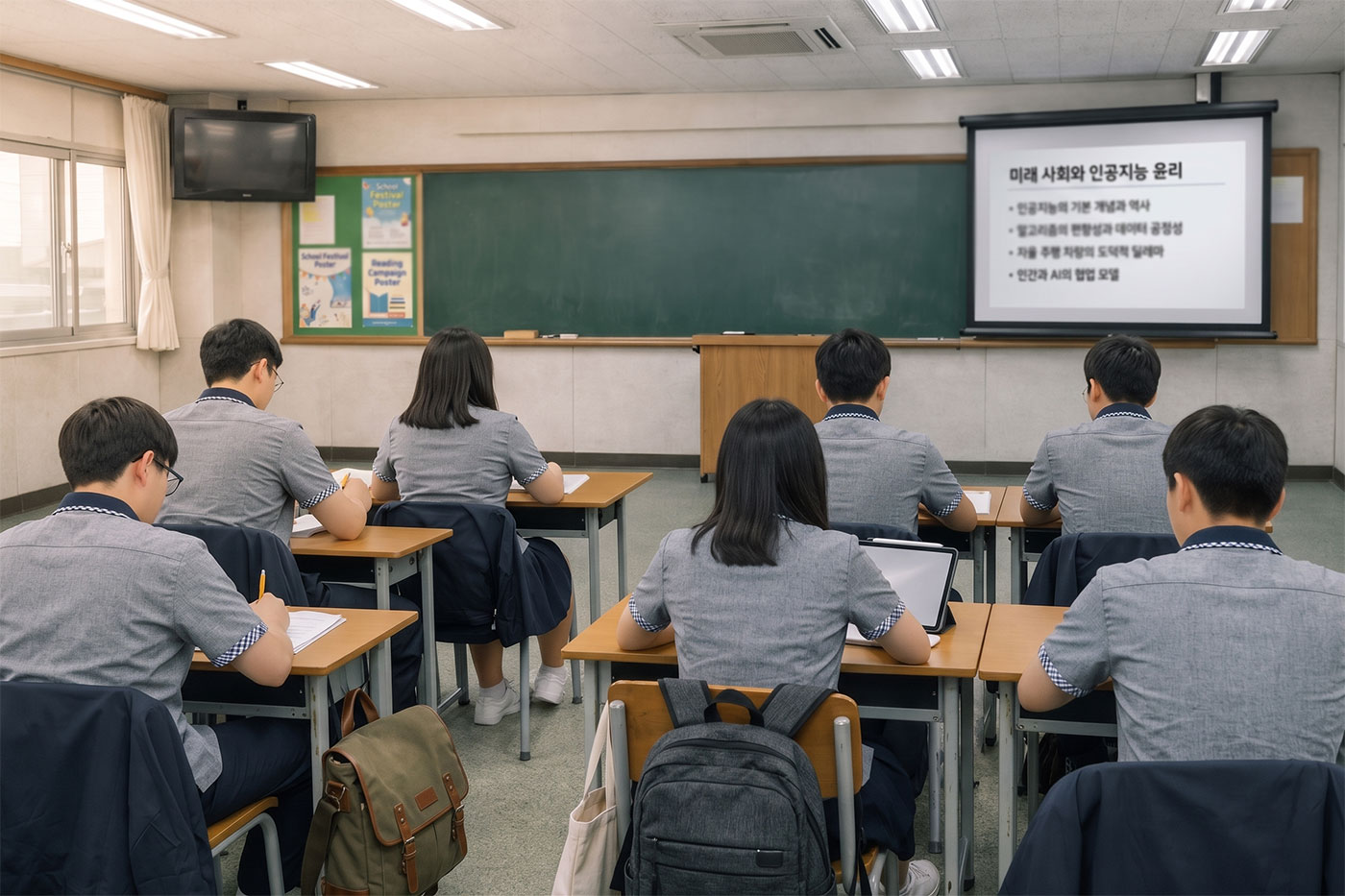
Why, then, has Korean education fallen from being a “national strength” to a “national burden”? Is it because the Ministry of Education has set the wrong goals? Looking at the most recent 2022 revised national curriculum (to be implemented from 2024), its stated objective is to cultivate “proactive individuals with inclusivity and creativity,” and it identifies creativity, critical thinking, collaborative communication, and self-directed learning as core competencies students should possess. These are indeed well-chosen capabilities required of citizens in advanced societies of the 21st century.
In fact, the importance of “creativity” among students, which was pointed out by Professor Kim Se-jik, had already been emphasized as a key educational goal as early as the Seventh National Curriculum of 1997. For nearly 30 years, at least on paper, the Ministry of Education has highlighted the importance of creativity. The problem, however, is that these goals have not been implemented in actual educational practice. In a country like Korea, where education is highly centralized, why has this occurred? The reason lies in the fact that primary and secondary education is effectively governed by university entrance examinations. In particular, the structure of the college admission system—especially the College Scholastic Ability Test (CSAT)—and the excessive pursuit of “fairness” within it have hindered the cultivation and evaluation of students’ creativity.
As discussed earlier, admission to prestigious universities has been regarded as a pathway to success, leading many to perceive university entrance exams not merely as educational selection but as a form of social status selection, much like the civil service examinations of the Joseon Dynasty. In educational selection, students may be chosen based on their potential for future growth even if their current performance is lacking. The U.S. holistic admissions system aims precisely to identify such students. However, when selection becomes tied to social status, strict reliance on current performance becomes unavoidable in order to maintain fairness.
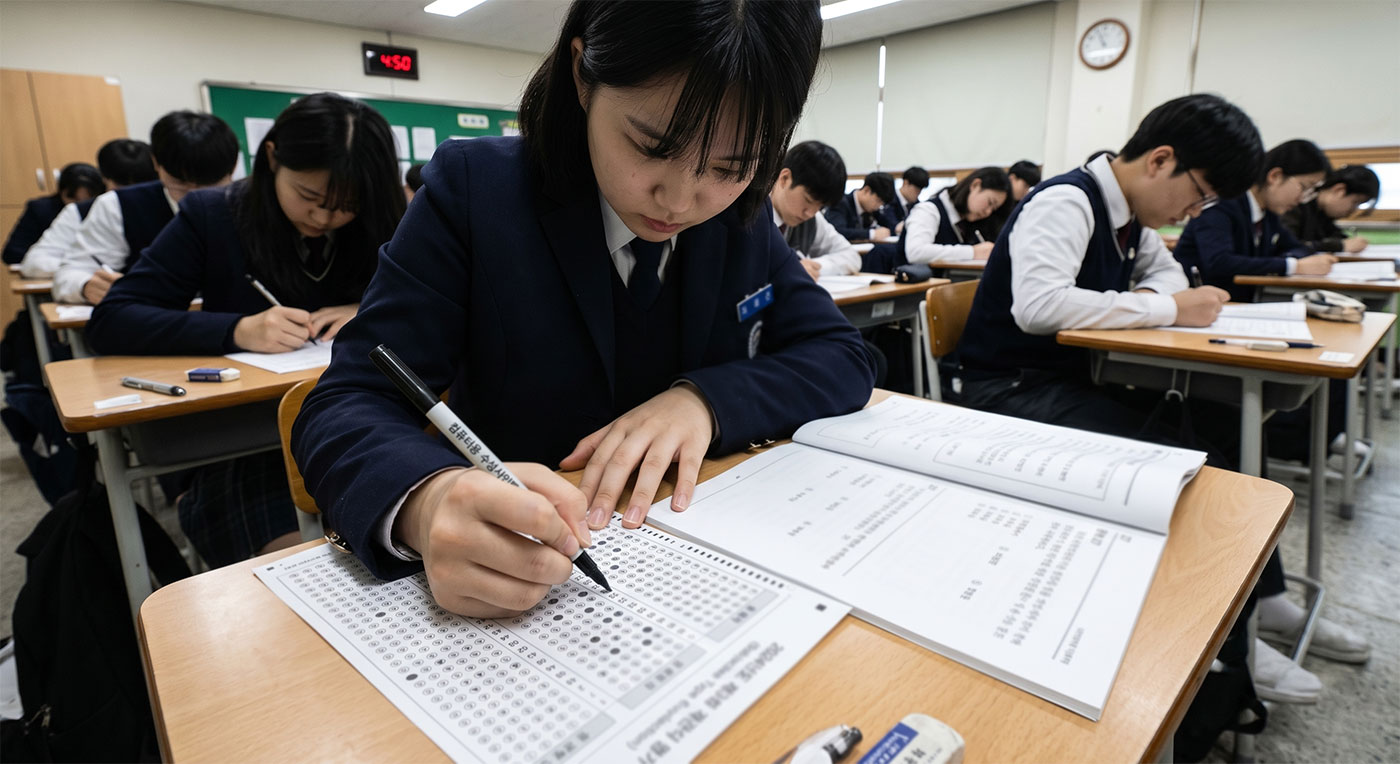
Since universities are educational institutions, admissions should, in principle, be based on educational selection. Yet in Korea, as explained in the book by former Minister of Education Seo Nam-soo (Seo Nam-soo and Bae Sang-hoon, Is the College Admission System a Status System or an Educational System?, Sungkyunkwan University Press, 2022), the admissions system operates more like a status-selection mechanism, with “fairness” as the overriding concern. For example, in regular admissions, only CSAT scores at the final stage are considered, without regard to a student’s starting point or background, as this method minimizes controversy. However, examining the distribution of students admitted to Seoul National University through this pathway reveals a high proportion from affluent areas such as Gangnam, indicating that education’s role as a ladder for social mobility has weakened significantly.
An even more serious problem is that this admissions system effectively destroys students’ creativity. Creativity is the ability to think differently from others. However, in exams that demand strict fairness, there may be a “correct” answer, but answers that differ from commonly accepted views are not recognized. In other words, thinking differently is considered “wrong” and results in a loss of points. The demand for strict fairness even makes it difficult to introduce descriptive, subjective questions, as grading may vary between evaluators. Consequently, the safest method remains multiple-choice questions with five options, as used in the CSAT. Yet such tests, which require students to reproduce memorized knowledge, cannot measure creativity. After becoming accustomed to this form of evaluation for 12 years, students enter university not to think differently but to search for the “correct” answers accepted by the majority. Ultimately, it becomes impossible to cultivate the “creative individuals” emphasized in educational goals.
In the future, which is expected to be shaped by artificial intelligence (AI) and the Fourth Industrial Revolution, core competencies such as critical thinking, problem-solving ability, creativity, and innovation will become far more important than in the past. However, it is impossible to provide education that fosters these abilities while maintaining the current admissions system.
As a result, Korea’s human resources will gradually lose competitiveness in the global market, leading to a contraction in the scale of its industries. As the relative weight of the Korean economy declines, citizens will ultimately experience a decline in living standards. Despite the inevitability of such outcomes, the political sphere has not been proactive in pursuing educational reform, as results are difficult to achieve in the short term and conflicts among stakeholders are likely.
Yet while successive administrations continue to pass the problem along, time continues to pass, and the risks draw ever closer. More tragically, today’s young generation remains trapped within a flawed system, staying up late at night memorizing useless knowledge and viewing classmates as competitors due to relative evaluation, leading to unhappy school lives. It is therefore not surprising that Korea records one of the highest youth suicide rates among OECD countries. How long will our older generation continue to neglect this situation?
Of course, there is still hope for improvement. The first source of hope is the advancement of artificial intelligence (AI) technology. In the near future, AI is expected to enable personalized education tailored to individual students, as well as inquiry-based, discussion-oriented, and experimental learning. Instead of uniform theoretical instruction in classrooms, it will become possible to provide practical, field-oriented education applicable to real-world contexts. Furthermore, the grading of descriptive and subjective answers could also utilize AI, reducing variability among evaluators and maintaining a reliable level of objectivity, as seen in systems like the International Baccalaureate (IB).
The second source of hope lies in making wise use of Korea’s declining birth rate. While the rapid decrease in the school-age population poses a serious threat to many universities, particularly smaller regional institutions, it also has a positive aspect. A reduced student population can ease competition for university admission, shrink the private education market, and shift universities’ focus from selecting students to recruiting them. If utilized effectively, this could encourage universities to specialize and diversify according to student demand. Ultimately, the outcome will depend on how well we adapt to these changing conditions. However, preparation must begin early.
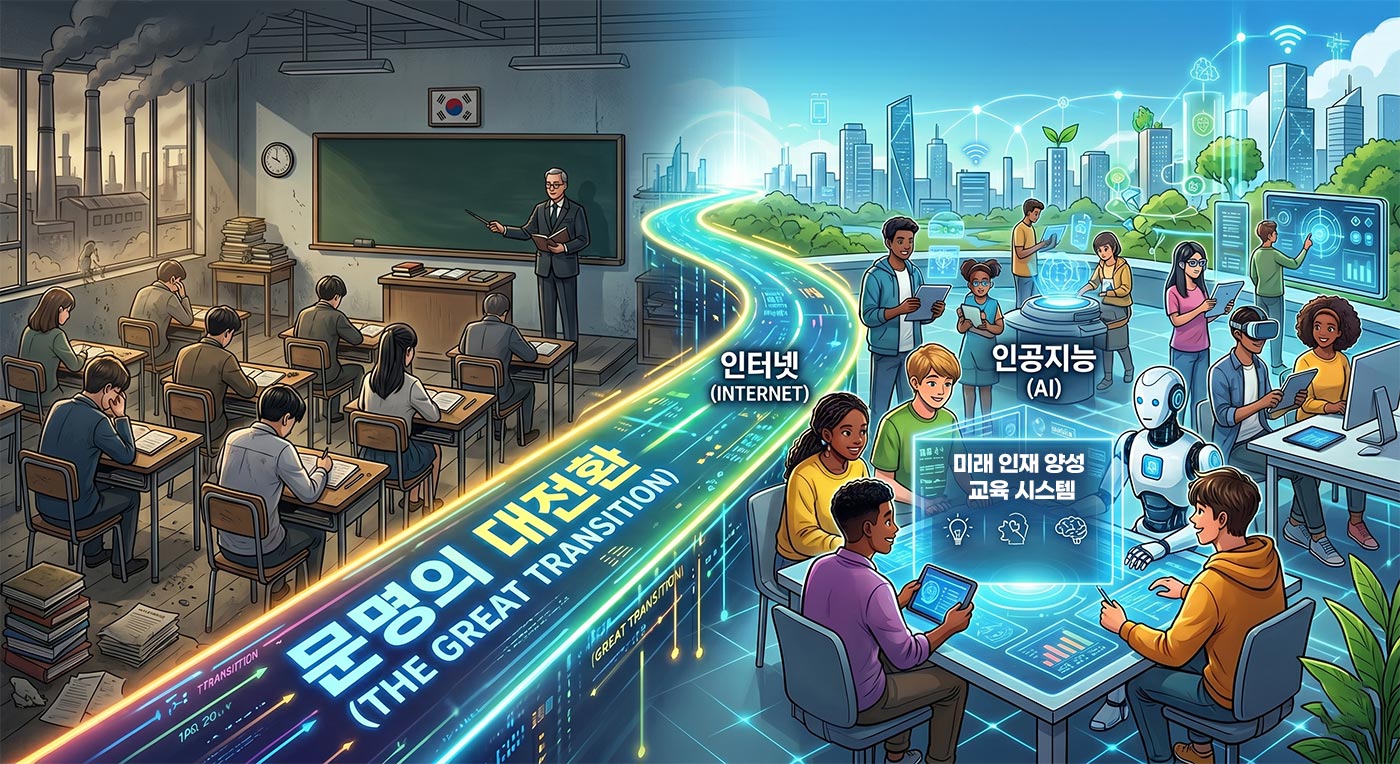
Humanity is now entering an era of great civilizational transformation. The internet and artificial intelligence are fundamentally reshaping our living environment, and accordingly, the capabilities required of future talent are changing dramatically. How we respond to these changes will determine the fate of both individuals and nations. Therefore, it is now time to innovate the educational system for cultivating future talent.
※ This article was supported by a project on future education conducted from 2023 to 2025 with the support of the Institute for Future Strategy at Seoul National University.