- The benefits received by SNU must be repaid through the love of the people
- SNU should realize noblesse oblige by producing “good talent”
- The “Ten Seoul National Universities” initiative must not lead to the downward equalization of national universities
- Exchanges and cooperation between SNU and regional national universities should be strengthened
- The Siheung Campus should serve as an advanced base for internationalization and regional development
- A groundbreaking policy is needed for the internationalization of SNU
- The benefits received through the Minnesota Project should be extended to the developing country
- The “1,000-Won Breakfast” fulfills students’ basic living needs
- SNU people with cool heads and warm hearts
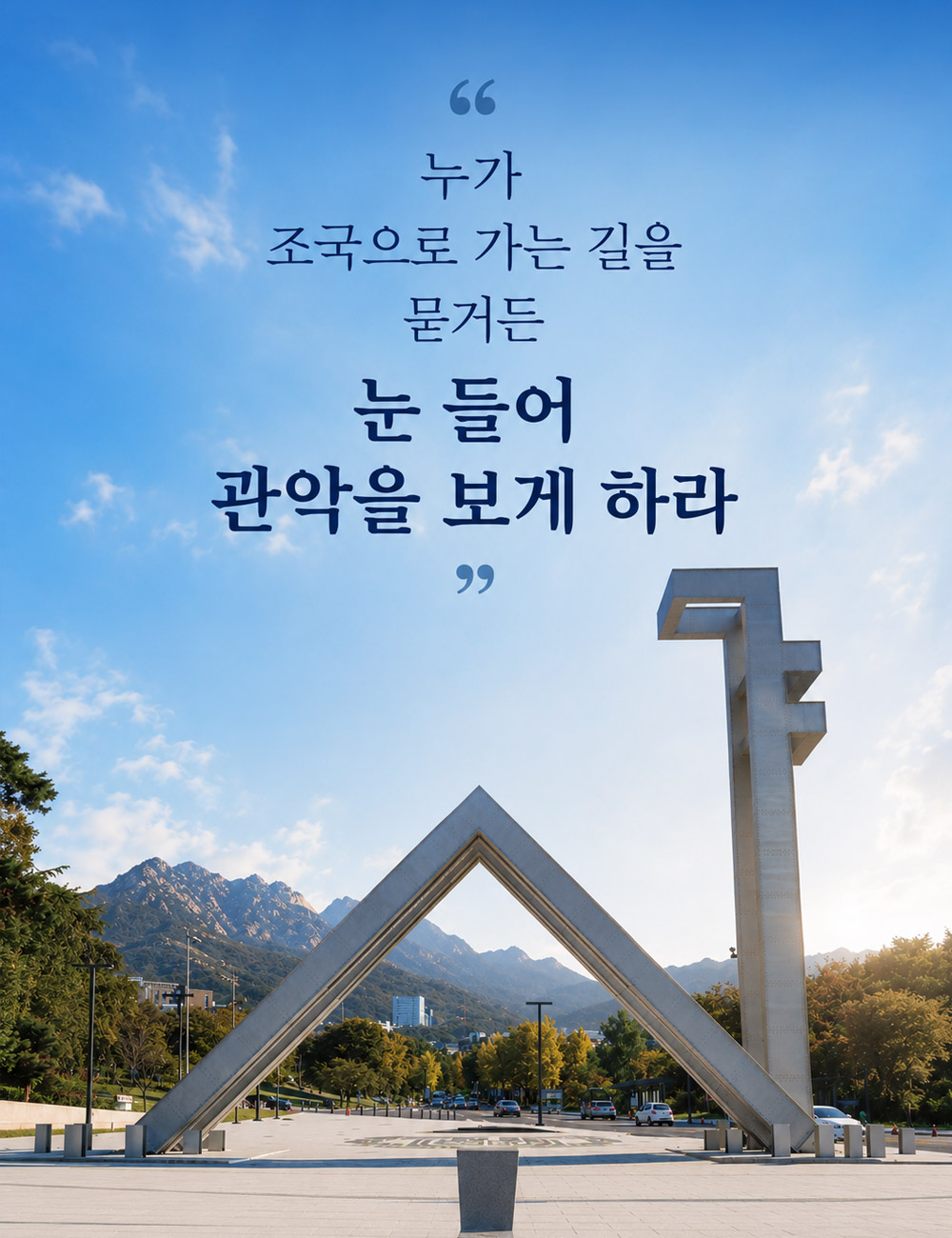
Jeong Hui-seong, a poet and alumnus of the Department of Korean Language and Literature, wrote in his poem The Temple of Blazing Light: “If anyone asks the way to the nation, tell them to lift their eyes and look toward Gwanak.”
In Korean society, producing an SNU student is often regarded as an honor for an entire family, reflecting the esteem in which Seoul National University and its graduates are held. At the same time, however, society demands that SNU fulfill its social responsibility—that is, its noblesse oblige. In my inaugural address as the 26th President of Seoul National University, I urged SNU members to become “good talent.”
SNU has received many benefits from Korean society. Consequently, it is accompanied by extraordinary expectations and hopes, but also by a degree of envy that cannot be ignored. During the administration of President Roh Moo-hyun, a report advocating the abolition of SNU was prepared by the Blue House and was officially discussed. Yet more than two-thirds of public opinion opposed abolishing the university. This was a symbolic indication that SNU enjoyed the affection of the Korean people. As a result, President Roh decided not to raise the issue of abolishing SNU any further.
The Lee Jae-myung administration has proposed the creation of “Ten Seoul National Universities” as a key policy initiative. It seeks to provide unprecedented financial and economic support to regional flagship national universities. Underlying this proposal is an approach similar to the numbering and restructuring of universities seen in France and Colombia. The Sorbonne in Paris, for example, was divided into thirteen institutions after progressive forces occupied universities and demanded social reform in 1968. Even universities outside Paris were assigned Paris University numbers. Nanterre University, the epicentre of the May 1968 movement, became Paris X University. Yet in the twenty-first century, major consolidation among universities has been underway to strengthen competitiveness. The fragmentation of the University of Paris ultimately weakened university competitiveness. The “Ten Seoul National Universities” proposal is an idea aimed at achieving balanced regional development in an era of regional depopulation. However, it must not inadvertently lead to the downward equalization of universities. SNU remains the only university in Korea with genuine world-class competitiveness. Both SNU and regional universities must advance together. During my presidency, I established a collaborative framework at the SNU Siheung Campus where faculty and students from SNU and regional universities could conduct joint research.
In fact, the monopolistic status enjoyed by SNU within Korea is difficult to find elsewhere in the world. The United States has numerous top-tier universities comparable to Harvard and the other Ivy League institutions. In Japan, Kyoto University has produced even more Nobel Prize winners than the University of Tokyo. In France, while the University of Paris was divided, the elite grandes écoles continue to exist for the education of the nation’s highest achievers. These institutions operate independently across various academic disciplines. Korea’s Enforcement Decree of the Higher Education Act requires that at least one out of every three faculty appointments in a department be filled by someone who did not graduate from that department. The target of this provision is clearly SNU. It is now time for SNU and its members to respond humbly to the existential demands of the nation and society.
Having received so many benefits, SNU must take the lead in education and research. To provide the minimum material foundation necessary for cultivating “good talent” and to ensure that students could enjoy a stable university life, I introduced the “1,000-Won Breakfast” programme. I could not ignore the reality that many students were skipping breakfast due to financial hardship and subsisting on a carton of milk and a piece of bread. Yet it would not have been appropriate for SNU students alone to receive meals funded entirely by the national budget. Therefore, we launched the “10-Billion-Won Relay Fundraising Campaign for Good Talent.” Thanks to the late senior alumnus Lee Soon-jae serving as the first donor, the campaign successfully achieved its goal. In the first year, students received a 1,000-won breakfast; in the second year, both breakfast and lunch; and in the third year, breakfast, lunch, and dinner were all made available for 1,000 won. The “1,000-Won Breakfast” programme received tremendous public support and has spread not only to national and private universities across the country but even to private companies. Today, “1,000-won meals” at public universities are supported by the national budget.
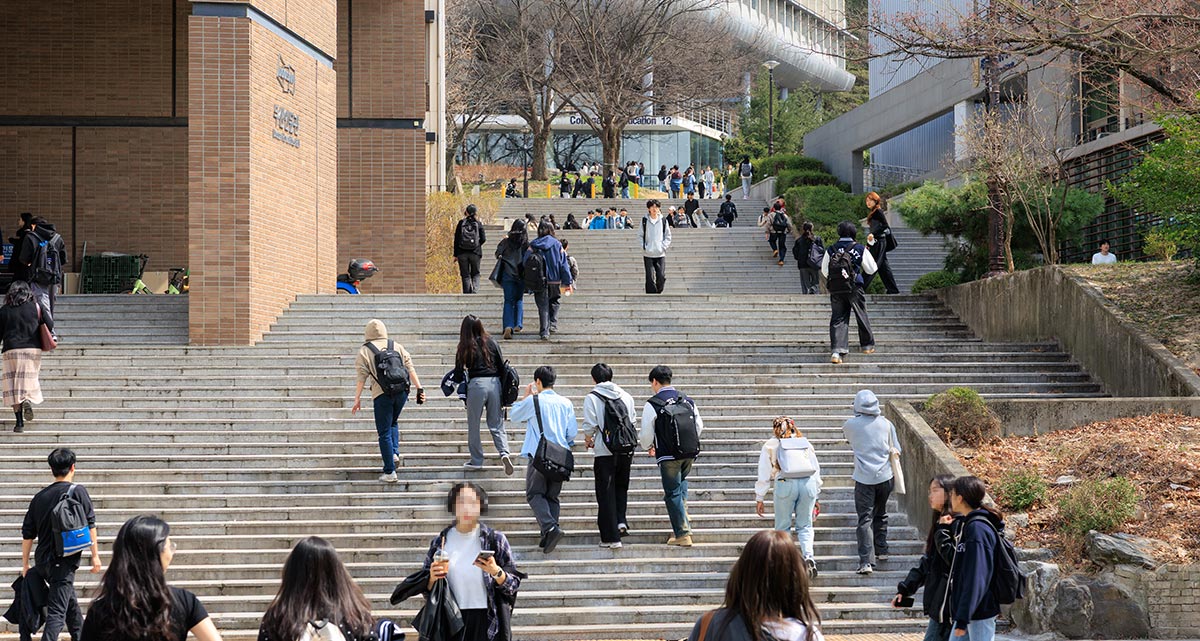
It is often mistakenly believed that SNU primarily admits students from the private academy districts of Daechi-dong in Seoul’s Gangnam area. Certainly, children from affluent families—including figures such as Samsung Group Chairman Lee Jae-yong and the son of Hotel Shilla President Lee Boo-jin—are admitted. Nevertheless, a significant number of outstanding students have overcome difficult circumstances to gain admission. More than 800 undergraduate students come from families whose monthly household income is around one million won. Tuition-waiver scholarships alone are insufficient to cover living expenses, forcing many of these students to take on private tutoring work rather than focus on their studies. To support them, we provided a monthly living allowance of 200,000 won. Since the monthly dormitory fee was approximately 130,000 won, this additional support helped ensure that financial concerns would not interfere with their education.
Beyond this, SNU must strengthen both its students’ sense of identity and its internationalization. My predecessor’s predecessor, President Lee Jang-moo, initiated the Siheung Campus as part of SNU’s international campus project, and this effort was continued by President Oh Yeon-cheon. While it would be difficult to require all undergraduates to live in residence throughout their entire studies as at Yale University, I believed that at least first-year students should experience residential life in order to establish solidarity and identity as members of SNU. Since the Gwanak Campus had already reached its capacity, I considered introducing a freshman programme at the Siheung Campus. However, opposition from not only the student council but even local merchants around Gwanak Campus, who displayed banners in protest, forced us to abandon the plan. Instead, we decided to establish Siheung Campus as a supplementary base for education and research. For example, the Institute for Peace and Unification Studies was relocated there, and preparations were made to enable exchanges between North and South Korean students in anticipation of a future era of reunification.
However, the Siheung Campus project, which had progressed smoothly for nearly a decade, encountered serious difficulties when students occupied the president’s office. They accused SNU of acting as a servant of large conglomerates in order to develop the Siheung Campus. Even during the Yushin era and the Fifth Republic, no university president’s office had been occupied for such an extended period. After the six-month occupation ended, the Siheung Campus hosted the groundbreaking ceremony for the “Siheung Mobility City” project, involving Korea’s three largest conglomerates—Samsung, Hyundai Motor, and SK—for the first time in its history. Had the project been derailed by the agitation of a small group of students, SNU would have lost a major engine for its future development.
The internationalization of SNU is an urgent task. In university rankings published by The Times and QS, the area in which SNU performs most poorly is internationalization. Nearby Asian institutions such as the University of Hong Kong and the National University of Singapore do not necessarily enjoy conditions superior to those of SNU. Yet the decisive reason they receive higher evaluations is their level of internationalization. These universities operate in English-speaking environments where English functions as an official language. As a non-English-speaking institution, SNU must intensify its efforts toward internationalization. To ensure that outstanding international students can receive a proper education, English-language courses must be significantly expanded. Even SNU professors—who include more faculty members with doctoral degrees from foreign universities, particularly in the United States, than any other university in Asia—often remain reluctant to teach in English. SNU also lags behind several major Seoul-based universities in both the quantity and quality of international students.
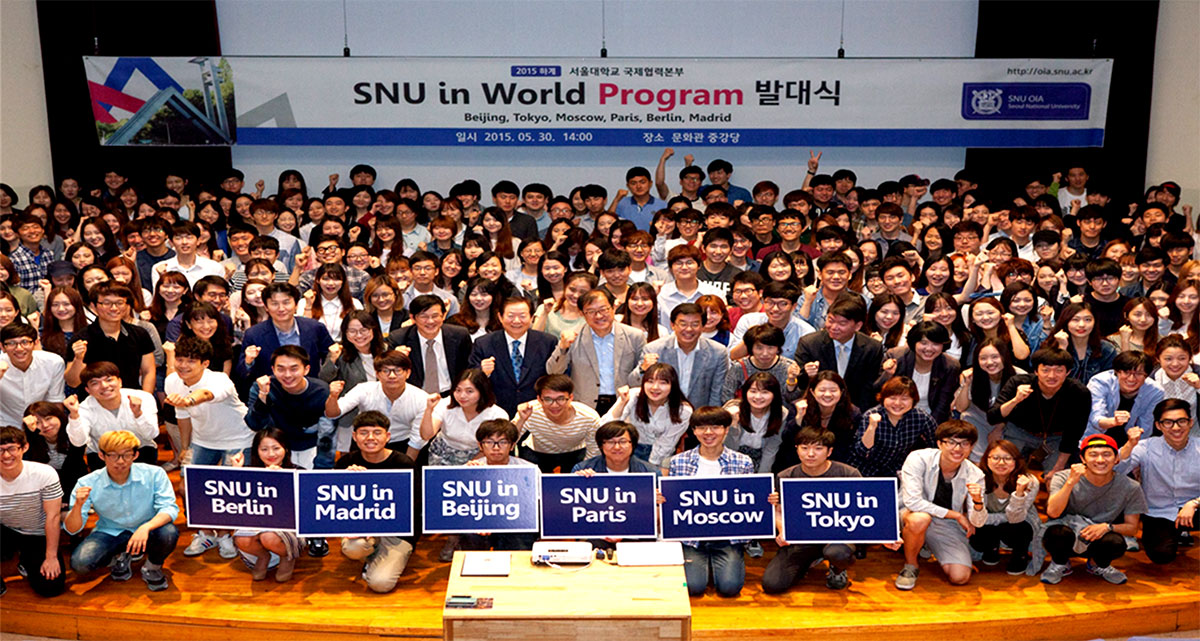
SNU has signed memoranda of understanding with nearly 200 leading universities around the world and conducts overseas training programmes for students and staff. In particular, there is a need to expand short-term overseas programmes, which can achieve substantial results at relatively low cost. When I took office, there were only four short-term overseas study destinations available during university breaks; by the end of my presidency, this number had expanded to fourteen. Programmes were established in Paris, London, Madrid, Berlin, Moscow, Beijing, Tokyo, numerous universities in the United States, and Australia. Students responded enthusiastically to the dedicated guidance of the programme directors and studied diligently. The feedback was overwhelmingly positive. Many students remarked that it was through these overseas programmes that they first felt a sense of pride and fulfilment as SNU students. In the future, these opportunities should be expanded not only to advanced countries but also to developing regions such as Southeast Asia, Latin America, and Africa. University administration must also become more internationalized. Since incorporation, university staff are no longer civil servants subject to government personnel exchanges but employees dedicated exclusively to SNU. The overseas training programmes for staff that were expanded during my presidency should be further strengthened. Although somewhat different in nature, the volunteer activities conducted in developing countries through the Global Social Service Corps have also achieved meaningful results.
In the aftermath of the Korean War, when the entire nation lay in ruins, the initiative that provided a decisive turning point in developing SNU’s research capacity was the “Minnesota Project.” Sponsored by the U.S. Department of State as part of post-war reconstruction efforts, the programme was administered by the University of Minnesota. It supported the rebuilding of Seoul National University through educational assistance, facilities, equipment, and overseas training opportunities for SNU graduates. Alumni from more than ten SNU colleges studied at the University of Minnesota and returned to become professors at SNU. During my presidency, on the occasion of the sixtieth anniversary of the Minnesota Project, I invited a delegation from Laos, including its university president, to participate. The historical record of that initiative was preserved through the publication of Research on the Minnesota Project, a collaborative effort involving faculty from various colleges. Today, SNU is extending to developing countries the benefits it once received from Minnesota. On one occasion, while the President of Korea was on a state visit to Africa, he was so impressed by the dedication of SNU-trained medical personnel that he personally conveyed his appreciation to the Office of the President of SNU.

Rather than opposing the “Ten Seoul National Universities” initiative, SNU should adopt an open attitude toward working together with regional universities. Government authorities should likewise create conditions that enable SNU to make greater strides toward globalization. SNU itself must renew its commitment if it is to be reborn as a university loved by the people. The concept of “good talent,” grounded in the pursuit of the common good and presented in my inaugural address, should constitute the fundamental spirit of every SNU member. We must cultivate not merely individuals who are intelligent and academically successful, but people who, with “cool heads and warm hearts,” embrace their duties and responsibilities as members of a community. Even without subscribing to Mencius’ theory of inherently evil human nature, it is difficult to argue that people are born virtuous. As social beings, however, human beings must continually cultivate their character through propriety and ethical conduct within society. Only then can they truly become “good talent.” As SNU approaches its eightieth anniversary while continuing to enjoy the special affection of the nation and society, it can fulfil its mission only when its “good talent” contributes to the creation of a “community of good people.”